

Qasem Newashi
Call for Application - Feasibility Study on Establishment of Production Facilities in Jordan
Call for Application
- Call for Application Number:SRD-CfW/0233/23
- Title: Consultant-Feasibility Study on Establishment of a Manufacturing for Brands Programme in Jordan
- Duty Station of the Consultancy:Hybrid (Home-based & in the filed)
- Duration of Consultancy:3 months
According to international standards, destination countries are expected to secure no less favorable treatment to refugee workers in a regular situation as compared to Jordanians and to enhance cooperation between stakeholders and to provide guidance on general protection measures. SRD Center highlights that migrant workers and their families should enjoy the same treatment with regards social security and rights to work.
The ILO 1998 Declaration on Fundamental Principles and Rights at Work also states that all workers, including refugees and migrant workers, should benefit from the basic rights envisioned within the eight fundamental right ILO Conventions, namely freedom of association and the effective recognition of the right to collective bargaining; the elimination of all forms of forced or compulsory labour; the effective abolition of child labour; the elimination of discrimination in respect of employment and occupation; and a safe and healthy working environment.
Nature of the consultancy:
The general objective of this activity is to conduct two feasibility studies on the establishment of new facilities in the QIZ areas (free zones) in Jordan in order to produce brand products through investing in the labor force that available in Jordan. The study will include the production of water piping, pumping, and storage tank through partnership with Williams Industrial Services Group Inc and VLN King and VLN Menthol King through partnership with 22nd Century Group.
Background and Introduction:
Key Areas of Assessment:
- Legal, Policy and Institutional Framework
- Socioeconomic Conditions
- Service Provision
- Gender Analysis
- Stakeholder Engagement: Assess the roles and responsibilities of relevant stakeholders, including the governmental institutions, civil society organizations, and international partners (Williams Industrial Services Group and 22nd Century Group) and determine their willingness and capacity to support the establishment of the facilities.
- Financial Sustainability and profitability
- Roadmap for the establishment of the planned facilities in Jordan.
Education, Experience and/or skills required:
Education
- Post-graduate or equivalent degree in Law, Public Policy and Management, Public Administration, Human Rights, Development Studies, International Development, or any other relevant university degree.
Technical experience/competencies
- Minimum international work experience of 5 – 10 years.
- Demonstrable technical experience in the field of training, migration management, migration policy, labour migration and human mobility, mixed migration, diaspora and development, and return/reintegration.
- Familiarity and demonstrated experience with gender issues in the context of human mobility in Jordan.
- In-depth knowledge of contemporary labour migration dynamics / migration and development issues in Jordan and other regions.
- Proven substantial involvement in conducting needs assessment and developing training modules/curriculum, training materials etc.
- Demonstrated experience and skills in facilitating stakeholder/working group consultations and trainings.
- Knowledge of global, continental, and regional policies, laws and initiatives regarding labour migration, migration, and mobility.
Skill
- Excellent analytical and organizational skills; ability to think critically and creatively;
- Skilled communicator, both verbally and in writing;
- Attention to detail and highly organized, collaborative, and team-oriented;
- High levels of proficiency with Microsoft Excel; proficiency with PowerPoint and Word;
- Demonstrated ability to manage multiple priorities, deadlines, tasks efficiently.
Language
- Fluency in English is required for this consultancy service.
How to apply:
Please fill in this form.
Refugees and Host Communities Seeking Self-Employment Opportunities in Jordan - Labour Market Analysis of Rihab (Mafraq), Wadi Musa (Ma'a,) and Quweirah (Aqaba)

01/16/2023
Jordan has faced repercussions from global events marked by the COVID-19 pandemic and the Ukraine crisis. The Syrian crisis had already placed tremendous pressure on social infrastructure, natural resources and employment. Rising interest rates combined with a surge in the national budget deficit has suppressed job growth and increased unemployment for both host and non-host country nationals. According to the Jordan Department of Statistics (DoS), the unemployment rate reached 22.6% during the second quarter of 2022. To understand and map socioeconomic needs, potential resources and stakeholders in three selected locations in Jordan (Rihab, Quweirah and Wadi Musa), ARCS commissioned a consultancy on Labour Market Analysis (LMA) to establish a baseline for livelihood opportunities for self-employment and businesses in the private sector. These target locations were identified based on their unique local cultural heritage and their development potential in the tourism sector. This Labour Market Analysis focused on refugees, women, youth and persons with disability (PwD).
The SRD study team used randomized sampling to conduct in-person surveys and interviews. Both quantitative and qualitative data were collected and disaggregated according to gender, age, and area, as applicable. The LMA collected evidence from a total of 764 individuals including 421 job seekers, 201 business owners, 32 Key Informant Interviews(KIIs) and 110 participants from 8 Focus Group Discussions (FGDs).
The findings section of the LMA is divided into two parts. The first part provides an overview of the key discoveries that emerged during the market analysis. The second part responds to the objectives of this LMA.
- At the time of this LMA in October 2022, the results depicted a weak business climate in Jordan. On the national level, rising interest rates and high inflation have resulted in an economic slowdown. More than half of the 201 businesses interviewed in this LMA reported slow or stagnant growth in their sector. Business owners said that market uncertainty was their greatest barrier.
- Evidence from the business survey showed that only4% of the businesses were growing in terms of the number of jobs and income. Rihab reported the greatest growth at 34.1% and Quweirah showed the least growth at 19.4%.
- The majority of business owners across all sectors were not planning to hire. This was partly due to seasonality within the agriculture and tourism sectors as well as sociocultural preferences for hiring. As it turned out, 46.8% of business owners typically hire through family and friends. This study found that business owners favor non-Jordanian nationalities, especially in the agriculture sector.
- The tourism sector in Ma’an Governorate showed the strongest growth. Agriculture was seen as the most challenging occupation for self-employment. The handicraft sector showed the most potential, but it was the least developed as a formal occupation.
- Job seekers responded positively to self-employment opportunities. According to the self-assessment results, 92% of the job seekers identified themselves as being self-confident and determined to succeed in a business. This finding pointed to job seekers’ heightened interest in self-employment opportunities and the need to provide trainings in all geographic areas. However, to be considered employable, job seekers needed technical skills and communication training. In addition, access to financial assistance was needed for business startups.
The Scope of the LMA was to conduct a thorough market analysis and mapping exercise of the socioeconomic needs and employment opportunities in the target locations of Wadi Musa, Quweirah and Rihab. The findings from this LMA provide insight on the viable entry points for making the labour market, for refugees and vulnerable Jordanians, more accessible and inclusive in the target locations. The LMA team compiled key market information that is organized into five separate tables, summarizing the following: 1) Potential Business Opportunities 2) Occupational Interests 3) Skills for Self-employment 4) Obstacles and gaps; and 5) Barriers to Employment. The tables below summarize these findings.
- The Tourism sector appealed to job seekers. However, many job seekers still lacked technical and communication skills as well as knowledge of the sector necessary for employment. In the agriculture sector, most respondents lacked access to land and financial capital.
- Agriculture was the least attractive sector due to the lack of land availability, unfavorable policies, lack of price transparency and water scarcity. However, in regard to direct employment, there are opportunities in the sector.
- The Handicraft sector offered the greatest potential for self-employment. But there appeared to be a need for marketing training in order to unlock this potential.
Recommendations per sector
Based on the LMA findings, the following recommendations are proposed.
Sector One: Tourism and Hospitality
- To ensure sustainability of ARCS and AVSI livelihoods programs, more collaboration with key stakeholders identified in this study, is advised. This means working closely with NGOs, Ministry of Education and Ministry of Tourism would be needed to strengthen educational and vocational training opportunities for job seekers to improve their technical and communication skills for tourism-related businesses.
- Provide professional training and certification in cosmetology, spa/skin care and hospitality services.
Sector Two: Agriculture and Agribusiness
- At the policy level, a vision must be created in order to incentivize and strengthen farming operations in Jordan. Continuous support must come from Ministry of Agriculture to reduce barriers, such as promoting value added products and building public-private farming alliances, cooperatives to stimulate and sustain growth in the sector.
- Provide technical assistance and training in horticulture, greenhouse/tree nursery installation as well as business mentoring to attract the younger generation and strengthen workforce capacity.
- Offer small grants or start-up kits to participants interested in agribusinesses.
Sector Three: Local handicrafts
- At the policy level, impose tariffs on imported handicraft goods to protect the Jordanian handicraft sector, creating a pro-local market to sustain self-employed artists.
- Run national campaigns to promote and market local handicrafts, including craft fairs, exhibitions and art galleries. Also provide handmade stickers “Made in Jordan,” as a trademark, for universal branding and visibility purposes.
- Provide training to existing artists, working with women and persons with disabilities (PwD) to improve and increase their skills in retail management, customer service and marketing skills, buyer expectations, and presentation.
- Develop an online network of artists linked with local merchants in the tourism sector.
- Identify private sector companies to supply local raw materials needed for manual production.
- Identify hotels interested in showcasing local art and products from local artisans.
- Establish an exhibition for all artists in the three targeted areas.
The LMA study identified an existing network of local stakeholders (CBOs, trade associations, civil society organizations, cooperatives, local authorities, universities, other formal and informal groups) providing entrepreneurial support. The table below presents stakeholders per area. For more details, see Annex 1.
Networking with the existing organizations would improve the quality and impact of ARCS and AVSI’s livelihood programs in Wadi Musa, Quweirah and Rihab. The organizations and associations listed above could promote livelihoods and community development through financial assistance in the form of soft loans that would complement the technical training and mentoring, crucial for entrepreneurship. Here are some proposed actions that could be undertaken in the target areas.
Recommendations per geographical area
In Wadi Musa, for example, the Wadi Musa Widows and Family Development Association could provide soft loans and mentoring to participants through offering trainings on home-based beauty salons and hospitality management, including English language courses; providing technical trainings greenhouse gardening to allow local growers to supply their produce directly to restaurants and hotels; and engaging handicraft artists in workshops on digital embroidery sewing and marketing.
In Quweirah District, the cooperation with Creativity for Development and Training Center, Al-Humaimah Ladies Charitable Association, and Nashmiyat Dabat Hanont Association is recommended to provide capacity building courses on project management, how to start a small project, and marketing skills, including trainings on cultivation of agriculture products and online marketing
In Rihab District, it is needed to increase information sharing and capitalize on Mafraq Vocation Training Center (VTC), to offer training. To improve access to educational opportunity in Rihab, one recommendation would be to make available a mobile vocational unit (VT caravan) to directly provide training to participants in cooperation with Rehab Gate Charitable Society and Ain Bani Hassan Charitable Society could provide soft loans and mentoring in these areas: Industrial kitchens that add value to dairy production for cheese making and supply of produce from greenhouse gardening for juice making; and training for local artists in sewing, mosaics, embroidery, and plastics recycling as well as in marketing.
SRD Center (Qasem Newashi & Jean Baker)
Download full report: Refugees and Host Communities Seeking Self-Employment Opportunities in Jordan
Orientation Sessions on the Labor Market
Orientation Sessions on the Labor Market
For raising self-awareness of cash workers’ professional skills and increase their employability in local markets
Session 1: Crossing the Bridge: An Introduction to Employability
Session 2: What Do I Bring to the World of Work?
Session 3: Imagining Your Ideal Job
Session 4: Planning for the Future
Objective: To raise self-awareness of 300 cash workers’ professional skills and increase their employability in the workplace.
Key topics:
- Self-awareness - knowing your skills and qualification
- Learning and exploring the opportunities in the community
- Setting goals
الرقابة على الشركات والدور الغائب

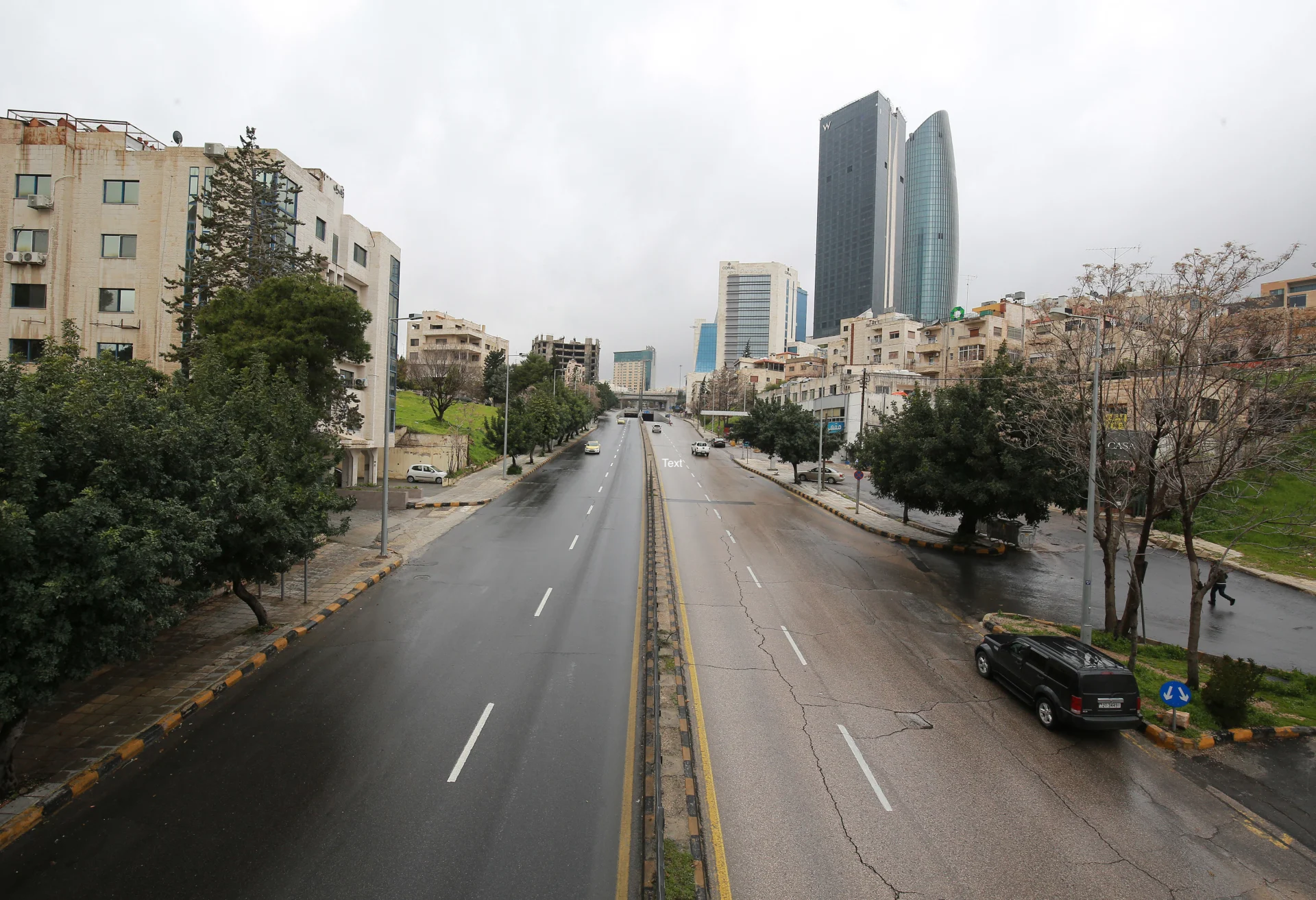
المصدر: مركز عيون لتنمية المجتمع المحلي
عند النظر في نتائج أعمال الشركات لعام ٢٠٢١، تجدها نفس الشركات تعلن كل عام عن تحقيق أرباح وتوزيعات على المساهمين، بينما تجد أكثر من ٧٠ شركة – وهي نفسها تعلن عن خسائر، وهبطت أسعار أسهمها إلى الحضيض، وهذه الخسائر تتكرر منذ سنوات طويلة.. يحدث هذا في الوقت الذي ترتفع فيه أصوات المسؤولين في المحافل الدولية بأننا دولة قانون ولدينا أنظمة للرقابة والمسؤولية والمحاسبة. ولكن، مع كل أسف وأسى، هذه القوانين والأنظمة غير مفعلة؛ حيث لم تقم أي جهة رقابية بسؤال إدارات هذه الشركات على مدى سنوات طويلة: هل لديها خطة لتجنب استمرار الخسائر؟ ودائما الجواب: (طبعا لدينا خطط)، ولكنها خطط شكلية وغير مدروسة؛ لأن الخسائر مستمرة وتتفاقم.
الكثير من هذه الشركات هي ضمن الشركات التي تمتلك فيها الجهات الرسمية، مثل الحكومة والضمان الاجتماعي ومؤسسة الأيتام حصصا كبيرة، فماذا فعلت دوائر الاستثمار لمحاسبة مدراء ومجالس هذه الشركات.. في أحسن الأحوال يتم إرسال كتاب للاستفسار، وليس مهما الرد، المهم أن يذكر في نهاية الكتاب: "ونثمن الجهود التي تقوم بها إدارة شركتكم". كما يجب عدم الاستماع لذريعة جائحة كورونا؛ لأن هذه الشركات كانت تحقق خسائر قبل الجائحة لسنوات طويلة!
فكيف تخسر الملكية الأردنية أكثر من رأس مالها حتى أصبحت القيمة الدفترية للسهم (سالب ١٩ قرش)؟ تستثمر الدولة في الملكية مبلغ ٢٩٠ مليون دينار لم يحقق هذا الاستثمار أي ربح للحكومة منذ أكثر من ٥٠ سنة! فأيهما أولى: البحث عن حل والتفتيش في أسباب الخسارات عبر العقود الماضية، أم البحث في جيب المواطن عن المزيد من الضرائب؟ للعلم لم تستفد الحكومة قرشا واحدا من هذا الاستثمار ولم يستفد المواطن كذلك، فلم تعلن الملكية ولو مرة واحدة عن حاجتها لتعيين موظفين (سوى مضيفين ومضيفات)، أي أن جميع التعيينات فيها لا تخضع لمعايير الشفافية.

وكيف تخسر صحيفة الرأي، وهي الصحيفة الأولى في الأردن، وكيف يتم اختيار إداراتها ولماذا لم يتم سؤالها عن خططها لمواكبة التطورات التكنولوجية العالمية في مجال النشر والاعلام، حتى وصل سعر السهم ١٥ قرش؟ علما بأن الخسائر ناتجة
وكيف تخسر شركة المقايضة للنقل، وهل التي تملك أكبر أسطول نقل في المملكة يضم مركبات تصلح لمختلف غايات النقل التي تحتاجها المؤسسات الحكومية أو الخاصة أو الدولية في الأردن وخارجه.
وكيف تخسر شركات تؤجر مساحات وهناجر للمصانع، وجميع هذه المساحات مشغولة بالكامل، مثل شركة التجمعات الاستثمارية المتخصصة التي تأسست عام ١٩٩٤ ولم توزع قرشا واحدا على المساهمين منذ تأسيسها؟ وشركة العصر للاستثمار التي أصبحت مثقلة بالديون لشركات الوساطة المالية حتى تنازلت عن بعض أراضيها لصالح إحدى شركات الوساطة؟
وكيف تخسر شركة الضامنون العرب للتأمين، رغم أن حصة كل شركة تأمين في السوق محفوظة، وتزيد كل عام ولا تنقص.
وكيف تخسر شركة الأنابيب الأردنية التي تأسست عام ١٩٦٩ تمتلك مصنعا رائدا في صناعة المواسير الحديدية على اختلاف انواعها ومقاييسها ومنتجاتها تباع داخل الأردن وخارجها؟ والدليل أن المصنع لم يتوقف عن العمل، بل وتتوسع الشركة إلى مصنع جديد لصناعة الأنابيب البلاستيكية كي تواكب التطورات الحديثة في صناعة الأنابيب، ورغم ذلك تخسر.
وكيف تخسر شركة رم للنقل، وهي التي توسع أسطولها كل عام بمزيد من المركبات؟
وكيف تخسر شركة الترافرتين، التي تعمل قطاع المعادن والتعدين المتنوعة، وقد تأسست عام 1996.
وكيف؟ وكيف؟.. والقائم تطول!
لماذا تستمر هذه الشركات في نفس النشاط والصناعة إذا كانت فعلا غير مجدية ولم يعد هناك طلب على منتجاتها؟ فإما أن تتحول إلى غايات ومنتجات جديدة وإما أن تغلق أبوابها تجنبا للمزيد من الخسائر وتضييع حقوق المساهمين. أو كما تقول الحكمة الأجنبية Forget your brand. ولماذا تتمسك مجالس إدارات هذه الشركات بمكانها بما فيهم المدير العام؟ هل الهدف هو حرصهم على تحقيق المزيد من الخسائر؟ أم لأسباب أخرى ربما تتعلق بأسرار الصناعة؟ وربما (المخفي أعظم)؟
لا بد أن هناك أسباب وراء السكوت على هذه الخسائر! وبناء على الأرقام الواردة في البيانات المالية المنشورة لهذه الشركات، فإن الرؤية المستقبلية لهذه الشركات أنها ستستمر في الإعلان عن المزيد من الخسائر في السنوات القادمة، خاصة أن مجالس إدارات هذه الشركات لا يملكون خطة عملية لإنقاذ الشركة وسلموا أمورهم لمديرها العام. صغار المساهمين في هذه الشركات ليس لهم صوت مسموع، حتى لو تجمعوا وامتلكوا النصاب للتغيير، فإن الجهات الرقابية ليس لديها إرادة لتفعيل القوانين لتغيير المجالس التي تستغل هذه الشركات لمصالحها الخاصة. معظمهم المساهمين في هذه الشركات يعتمد عليها كدخل، وتقاعد، ومن واجب الحكومة أن تحميهم وتحمي أموالها لوقف هذا الانهيار.
الأمم المتحدة تدعو إلى مواجهة التحديات الاقتصادية في الأردن

United Nations’ Report Calls for Confronting the Economic Challenges in Jordan
مركز الاستدامة للبحث والتطوير
أصدرت مجموعة الأمم المتحدة للتنمية المستدامة UNSDG تقريرا لتقييم أنشطة الاستجابة لتداعيات جائحة كورونا في الأردن والتي نفذت من قبل "نظام الأمم المتحدة للتنمية UNDS". ويقدم التقرير تحليلا لكيفية تأثير التعديلات لنظام الأمم المتحدة الإنمائي على الاستجابة. وسعى هذا التقييم إلى الكشف عن كيفية تضمين أنشطة الاستجابة لقيم ومبادئ حقوق الإنسان، والنوع لاجتماعي، وادماج الفئات الأقل حظا والأشخاص ذوو الإعاقة، والاهتمام بجميع أفراد المجتمع بشكل متساو، وبدون استثناءات أو تحفظات. ومن المتوقع أن تساعد نتائج هذا التقييم في تعزيز استجابة أذرع الأمم المتحدة لجائحة كورونا وغيرها من الأوبة، وذلك من خلال تطوير ادوات وآليات جديدة وفعالة نحو تحقيق أهداف أجندة 2030 في الاردن، وبحيث يستفاد من هذه النتائج في دول أخرى تتشابه في ظروفها الاقتصادية والاجتماعية مع الأردن.
وتحديدا، يعرض التقرير النتائج والتوصيات المرحلية بعد استكمال جمع ما يقارب ثلث البيانات المخطط لها. وسيتم إعادة النظر في التوصيات وإثرائها خلال المرحلة اللاحقة من التقييم. كما يتوقع أن يصدر التقرير الختامي للتقييم في سبتمبر 2022. الغرض الأساسي من هذا التقرير هو تقديم توصيات في إطار المراجعة الشاملة للسياسات والتي تجرى كل أربع سنوات وذلك لدعم صنع القرار في مجال الأنشطة التشغيلية للمجلس الاقتصادي والاجتماعي.
حالة طوارئ تنموية مستمرة. أدت جائحة كورونا إلى إيجاد حالة طوارئ إنمائية شاملة ومستمرة، حيث تسببت الجائحة في دخول المجتمعات في اضطرابات عميقة في قطاعات الصحة والتعليم والخدمات الأساسية الأخرى، كما أدت إلى تفاقم عدم المساواة وظهور آثار سلبية، خاصة على النساء والشباب والعاملين في القطاع غير الرسمي والأشخاص ذوي الإعاقة وغيرهم من الفئات الأقل حظا. وخلص التقرير إلى أن جائحة كورونا تسببت في عكس مسار التقدم نحو أهداف التنمية المستدامة.
استجابة نظام الأمم المتحدة الإنمائي في الأردن. أشار التقرير إلى أن الفريق التابع للأمم المتحدة في الأردن، وبإشراف المنسق المحلي ومنسق الشؤون الإنسانية، قد حقق نتائج ملموسة في متابعة واستدامة استجابة الأمم المتحدة لجائحة كورونا من خلال تعزيز نهج الترابط بين البرامج الإنسانية والإنمائية وتنفيذ إجراءات شاملة وموحدة، وذلك لدعم التماسك الاجتماعي والنمو الاقتصادي في الأردن.
تحديات اقتصادية متوالية. لقد واجه الاقتصاد الأردني تحديات متعددة على مدى العقد الماضي أعاقت النمو الاقتصادي وأدت إلى ارتفاع كبير في معدلات البطالة خلال السنوات الماضية، ونسبة كبيرة من السكان يعملون في مؤسسات ومصالح صغيرة غير رسمية، ويشكل الشباب والنساء والعمال اللاجئين غالبية العاطلين عن العمل، والذين يعملون غالبا في فترات متقطعة بأجور متدنية. وتعمقت التحديات الاقتصادية في الأردن في ظل جائحة كورونا، ولا زال الحال مستمر رغم قيام الحكومة بوضع النمو الاقتصادي في أعلى سلم أولويات أعمالها.
المرأة هي الأكثر تضررا. وقد توصل التقرير إلى أن مشاركة المرأة في العمل تعرضت بشكل كبير للخطر أثناء انتشار الوباء، حيث ٧٠٪ من النساء يعملن في قطاعات غير رسمية، مما يجعلهن الأكثر عرض لفقدان وظائفهن من دون الحصول على تعويضات مناسبة. كما أن ٤٠٪ من النساء عملن في القطاعات الأكثر تضررا، مثل الخدمات الفندقية والضيافة وخدمات الطعام وتجارة التجزئة. وحسب التقرير، فإن نسبة مشاركة المرأة في القوى العاملة في الأردن تعد من أدنى المعدلات في العالم حيث لا تتجاوز 14٪.
الأردن شريك استراتيجي عالمي للتخفيف من اللجوء. لطالما كان الأردن ملاذاً للاجئين من جميع أنحاء المنطقة، حيث يستضيف اللاجئين من سوريا وفلسطين والعراق واليمن والسودان والصومال ودول أخرى. وهذا يجعل الأردن في وضع شريك استراتيجي عالمي، وعلى الرغم من أن المجتمع الدولي يقدم مساعدات كبيرة لدعم اللاجئين والمجتمعات المضيفة في الأردن، إلا أن مستوى الضعف والتعرض لخطر التهميش لمجموعات كبيرة من اللاجئين لا زال مرتفعا، علما بأن الكثير من المساعدات تقدم بشكل نقدي أو مواد غذائية. وبحلول أزمة كورونا تفاقمت مشكلات الفئات الأقل حظا وتزايد معدل التراجع في مستوى التقدم نحو تحقيق أهداف التنمية المستدامة، وأصبحت تطبيق أجندة ٢٠٣٠ عرضة للفشل بسبب عدم توفر دعم ومساعدات دولية تتناسب مع حجم التحديات والأخطار الاجتماعية والاقتصادية التي يواجهها معظم السكان، وخاصة النساء والفتيات واللاجئين والعاملون في القطاع غير الرسمي، الشباب العاطلون عن العمل.
Source: Interim Report: System-Wide Evaluation of the UNDS Response to COVID-19 March 2022.
Integrity and Anti-Corruption Curriculum

UNDP, 2013
Anti-Corruption Curricula in primary and secondary schools – working sessions took place with UNDP, experts from SRD Center, and representatives from the Iraqi Ministries of Education (Federal and KR-I) and the Commission of Integrity on 20th August where need assessment, methodology and work-plan was agreed[1].
The final curriculum covered all learning subjects including mathematics, science, languages, civic education, history, geography and religious education. A technical committee of specialist was established and assigned for each school subject from the Ministry of Education (Federal and KR-I). The participants agreed that the curriculum is seen as the overall educational experiences that will be made available for children, including textbook, teacher and classroom teaching and extra-curricular activities, which will be planned and supervised by the school.
The final deliverable of this project was a Reference Guide that includes extracurricular activities – to promote the values of integrity and anti-corruption in the school curriculum that targeting school students and teachers. The new curriculum was not be produced as a separate learning subject as the current school timetable cannot accommodate any new topics as it will overburden the students.
Based on the agreed work-plan, a survey on all subjects at primary and secondary school levels took place to identify existing material on integrity, accountability and transparency. The result of the survey used to enhance the existing curriculum and introduce further material and extra-curricular activities for identified topics.
[1] Supporting Iraqi Compliance with the United Nations Convention against Corruption (UNCAC) and Combating Corruption at the Governorate Level, 2011.
Business Skills Development Program in Za’atri Refugee Camp

Baseline Assessment of Women’s Business Skills in Za’atari Refugee Camp
The baseline assessment of business skills was designed to assess the capacities of women in Za’atari Refugee Camp in order to be used as a baseline for developing the detailed educational plan as well as targeted curricula aligned to the capacities of the participants.
A face-to-face individual interviews were adopted to collect data and information for this report, including qualitative and quantitative methods of analysis to data collected.
Based on the data collected, the following results have been achieved:
- Preparing the educational plan;
- Drafting the curricula and selecting the learning content, including the activities and worksheets; and
- Drafting the selection criteria of the participants and selecting the list of participants;
METHODOLOGY
Development of Data Collection Tool
SRD team grouped the relevant information planned to collect into the following categories:
- basic information;
- core business skills; and
- business status.
With guidance from UN Women staff, both in Amman Office and in the field in Za’atari Refugee Camp, who suggest changes and provide culturally appropriate guidance that would make our questionnaire easier to interpret and understand. Once we had a working draft of the questionnaire, we trained our field staff (enumerators) to conduct pilot interviews to ensure that the questionnaire questions were clear and relevant to the potential concerns of participants. Once we had a version of the questionnaire that we were all comfortable with, we translated it to Arabic language.
Field Research and Data Collection
We conducted rapid and extensive field research in Za’atari Refugee Camp during the last week of February 2017, in order to evaluate the current business skills and business status of women in Za’atari Refugee Camp. This information will be used to guide the design and development of the training program and to create a set of baseline metrics against which to measure future progress. Several specific quantitative indicators were developed based on the assessment results.
The qualitative information generated through the face-to-face interviews. Each respondent was informed of the purpose of their participation and the confidentiality of their responses. In order for the survey results to be generalized to the target beneficiary population, a minimum sample size of 80 respondents was critical. By the end of the field research, we had conducted 82 surveys among potential beneficiaries in the districts covered by UN Women in Za’atari Refugee Camp. The quantitative data was analyzed in Excel and SPSS. Percentages of the frequencies of different responses for each question were calculated in Excel while regressions, odds ratios, cross-tabulations were calculated using SPSS to draw relationships between responses to different questions.
RESULTS
Socio-Demographic Information
The ages of the women surveyed ranged from 19 to 58. The average age of the women surveyed was 35 years, with 40% of the women falling within the range of 31 to 40. The majority of the women were married (72%), one tenth of the women were widowed (11%), single/never married (10%), and a small percentage were separated/divorced (6%).
|
Marital Status |
Frequency |
Percent |
Valid Percent |
Cumulative Percent |
|
Married |
59 |
72.0 |
72.0 |
72.0 |
|
Never Married |
8 |
9.8 |
9.8 |
81.7 |
|
Separated/Divorced |
5 |
6.1 |
6.1 |
87.8 |
|
Widowed |
10 |
12.2 |
12.2 |
100.0 |
|
Total |
82 |
100.0 |
100.0 |
While 98% of women surveyed had attended school, the majority (67%) had not made it past preparatory school, which indicates that overall education levels are relatively low. Only women cannot read and only two women completed Bachelor degree.
|
Educational Level |
Frequency |
Percent |
|
Cannot read |
2 |
2.4 |
|
Elementary School |
21 |
25.6 |
|
Preparatory School |
32 |
39.0 |
|
Secondary School |
24 |
29.3 |
|
Diploma |
1 |
1.2 |
|
Bachelor |
2 |
2.4 |
|
Total |
82 |
100.0 |
Women’s Business Skills
The report concludes that women in Za’atari Refugee Camp are mostly caring for their families. These women struggle with a lack of resources, empowerment, and access to services. The women with whom we spoke are eager to acquire new business skills and to start their businesses. The following table shows the baseline level of each indicator we used in the assessment of the business development skills and capacities.
Employability Skills “TOT” Workshop
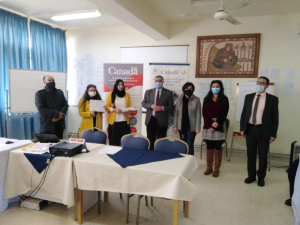
World University Services of Canada, WUSC
Project Title: Women’s Economic Linkages and Employment Development (WE LEAD)
Introduction
Within the framework of the project ‘Women’s Economic Linkages and Employment Development (WE LEAD), WUSC has commissioned the consultancy firm Sustainable Research and Development Center (SRD) to conduct a training workshop on Employability Skills, Labour Market Assessment, and Networking benefiting 17 trainers form Vocation Training Corporation and Vocational Training Centers in Jordan. The training workshop conducted on 18 January to 1 February 2021 at the Abu Nsair VTC, Amman.
Key activities during the workshop
- Opening Session
On the first day of the workshop (18 January 2021), and after registration of participants, Ms. Alia Alrawashdeh, as a representative of WUSC, provides a short speech in which she presented a short introduction about WUSC and its goals in Jordan, and Alrawashdeh explained the objectives of the workshop and the importance of learning advanced skills on employability, labour market assessment, and networking. A team from WUSC provided daily follow up and support to the workshop, included Ms. Muna Makahleh and Mr. Mohammed Husban. Thanks for WUSC team who shared in many sessions their experience and contributed efficiently to the training activities to ensure that participants benefiting the maximum of the training workshop.
- Key Training Sessions
During the 10-day workshop, the trainer facilitated a series of training sessions in order to improve the participants employability skills that young graduates from the VTC needs as cross-cutting professional skills, which are lacking in the VTC curricula. The main topics that have been delivered:
- Career guidance
- Work Readiness
- Positive Thinking
- Team Building and Teamwork
- Effective Communication and Presentation Skills
- How to Market yourself (CV writing, Interview Skills)
- Labour Market Assessment
- Work Ethics and employee obligation
Key Results
- The training workshop has contributed in improving the knowledge, skills, and attitudes of the participants on employability skills, labour market assessment, and networking with stakeholders. This conclusion based on the written evaluation results (see section: Monitoring and Evalution).
- The training workshop was a new partnership success story while the participants has been guided to develop new tools that should contribute in importing the institutional capacities of their departments. These tools included:
- Individual Employability Development Plan (خطة التطوير الوظيفي الفردية). This tools is to guide the trainees in the VTC from the first day they attend the training till after the graduation from the VTC.
- Curriculum Vitae Form (نموذج سيرة ذاتية) customized for VTC graduates.
- Job Interview Form (نموذج تقييم نتائج مقابلة العمل).
- Youth Data Collection Tool (استمارة جمع المعلومات من الشباب), and it has been built in Kobo Toolbox.
- Employer Data Collection Tool (استمارة جمع المعلومات من اصحاب العمل).
- NGOs Data Collection Tool (استمارة الجهات ذات العلاقة).
- Labour Market Assessment Plan (خطة تقييم سوق العمل).
- Career Path Evaluation Form (تقييم المسار المهني).
Advancing TVET for Youth Employability and Sustainable Development
Promising Practices in TVET and Entrepreneurship Education in the Arab States
19–21 November 2013, Beirut, Lebanon
Arab States
The Final Report has been compiled by Dr Sulieman Sulieman, Ms Lisa Freiburg, and Dr Qasem Newashi, SRD Jordan (consultant).
In response to the call of the Third Technical and Vocational Education and Training (TVET) Congress to collect and disseminate evidence-based policies and practices, the UNESCO-UNEVOC International Centre for TVET, Bonn, and UNESCO Regional Bureau, Beirut, in cooperation with the Ministry of Education and Higher Education, Lebanon (General Directorate for Vocational and Technical Education, GDVTE, and Center for Educational Research and Development, CERD), organized a three-day Regional Expert Meeting (Beirut, 19–21 November 2013) as a platform for networking and dialogue involving regional UNEVOC centres, TVET institutions, and other relevant stakeholders.
The goal of the Expert Meeting was to facilitate panels of experts for discussion and exchange of experiences by mapping contemporary issues and showcasing skills development strategies, evidence-based approaches, and innovative practices in the areas of youth, employment, and skills for business entrepreneurship; entrepreneurship education (EPE) and the use of information and communication technology (ICT); and regional/international cooperation and coordination on TVET merging issues and priorities (in other words, greening TVET).
The Regional Expert Meeting in Beirut was the last of a series of forums held in 2013. Kicking off in San José, Costa Rica, and soon followed by Abuja, Nigeria; Seoul, Republic of Korea; and Moscow, Russian Federation, the regional meetings facilitated high-level panels of experts discussing contemporary issues and highlighting skills development strategies, approaches, and innovative practices focusing on greening TVET and youth employment. These themes were identified in close consultation with the cluster coordinators of the network in earlier meetings in 2013.
Based on the invitations sent to the National Commissions for UNESCO in the Arab region, thirty- two officials and experts participated in the Expert Meeting, including representatives from Egypt, Iraq, Jordan, Lebanon, Libya, Sudan, Syria, Tunisia, United Arab Emirates, Yemen, Germany, the Republic of Korea, the United Kingdom, and Nigeria. Among the participants were representatives from UNEVOC centres, non-governmental organizations (NGOs), regional and international organizations, and the private sector.
In the three-day meeting, participants presented promising practices in TVET and shared their experiences by highlighting success stories on the introduction of entrepreneurship education (EPE)
and ICT in TVET. The promising practices presented
by UNEVOC centres in the Arab States underlined
the extent of educational reform in many of the countries, and revealed a number of recent initiatives dedicated to building linkages with the private sector, the training of teachers/trainers, and curriculum development for entrepreneurship and life skills.
In addition to national perspectives, UNEVOC Centre representatives from Nigeria, Germany, and the Republic of Korea gave presentations on regional activities in their respective regions focused on greening TVET and youth unemployment. Representatives from regional and international organizations, including the African Development Bank (AfDB)/London School of Economics (LSE), United Nations Economic and Social Commission for Western Asia ESCWA), and INJAZ, concentrated their presentations on policies and practices to tackle youth unemployment through TVET and entrepreneurship education.
The meeting highlighted the common challenges that are faced by many countries in the Arab States: increasing youth unemployment levels, poor linkages between education and training and industry, and a shortage of entrepreneurial youth who are sufficiently equipped to create their own jobs. Despite these issues, the focus was on sharing success stories and promising initiatives that could benefit others in the region. Working group sessions provided participants with the opportunity to engage in in-depth discussions and identify areas for collaboration in the region. The meeting demonstrated the willingness of different institutions to work closely together in tackling common issues in TVET. It emphasized the interest of participants in working together on the development of an ICT-based platform to facilitate the sharing of experiences specifically on EPE.
Also available at: https://unevoc.unesco.org/fileadmin/up/arab_states_regional_meeting_report_2013online.pdf