
Qasem Newashi
The Plight of Labour Market in Refugee Camps in Jordan


Within the framework of the Jordan Response Plan to the Syria Crisis 2018-2020 and FCA’s Jordan Country Strategy, FCA works on multiple levels to respond to the specific needs of Syrian refugees and communities. FCA’s projects in the Zaatari and Azraq camps contribute to improving the resilience and well-being of Syrian refugees. Therefore, this study has been conducted to investigate market opportunities, to identify concrete ways for refugees to start new micro- businesses or integrate into the labour market, and for FCA to support their development taking into account specific situations, challenges, and opportunities faced by female and male refugees.
A mixed methodology and participatory approach was adopted to collect data, including qualitative and quantitative methods of analysis. The study was conducted from October to February 2019, were used. Secondary data were compiled and processed while primary data were collected through Focus Group Discussions (FGDs).
The study’s key findings show that since the Syrian refugees have arrived in Jordan, they have received a variety of skills and qualifications that they didn’t hold before coming to Jordan. However, the majority of interviewed households in the Zaatari and Azraq camps are economically inactive, and the refugees do not have a plan to return to their homeland. The results demonstrate that most Syrian refugees have skills and experience which can benefit both the camp and surrounding communities. Increased awareness of this could help to change public perceptions and foster community cohesion.
Further, the study showed a rate of unemployment of 54% and partial unemployment of 43% among the interviewed households*. Expansion of the current FCA programming needs to be directed towards vocational training projects, with an increased focus on business skills and self- employment. It also shows that the current labour market inside the camps, as the main employer, is an inflated sector that cannot expand further. There are potential opportunities to involve the private sector in expanding the labour market in the surrounding areas of the camps. Therefore, until private companies and other private employers are in a position to recruit more extensively, FCA could promote skills that lend themselves to self-employment.
As a conclusion, without enabling Syrian refugees to be economically active and integrating them into the labour market, they will continue to rely on international assistance. It is a very artificial environment with INGOs supporting and funding Syrians just to live. To date, much of the international livelihood support has been in the form of food and cash assistance to most Syrian refugees. The combination of the current aid system and legal constraints is contributing to a sense of dependency among the Syrians and represents a waste of valuable human resources and potential due to the dependency on humanitarian aid. Young people growing up in this
environment miss the opportunity to acquire professional accredited knowledge and skills which are critical for their protection, development, and reconstruction of themselves and their communities.
Finally, this study identifies the practical recommendations specific to the refugee populations of the Zaatari and Azraq camps. FCA, in cooperation and coordination with the GoJ, donors, UN agencies, and international and national non-governmental organizations, needs to
- Facilitate the role of the private sector in generating new employment opportunities in the areas surrounding the camps,
- Work to enact a legal tool to protect the refugees’ financial rights to enable them to legally claim their wages,
- Increase the vocational training opportunities for those older than 32,
- Expand outreach to connect Syrian refugees with the labour market, including the
- establishment of employment service centers and develop mobile applications, and
- Provide an enabling environment for small and micro enterprise development inside the
- camps and legal environment for marketing the products outside the camp.
Markets - Labor
Labor Market Assessment
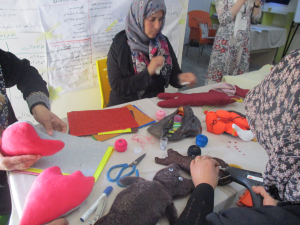
SRD Center assesses existing skills and opportunities in the labor market to help organizations tailor trainings and other livelihoods interventions. Special consideration is given to special needs for supporting women and men from urban and rural settings particularly young women, returning migrant workers, young workers in rural economies, refugees, persons with disabilities, and other groups with special needs.
SRD Center conducts labor market assessments for livelihoods protection and youth employment programs in response to poverty and unemployment in refugees and other vulnerable communities. Our labor market assessment approach focuses on:
- Major changes in employment demand in target populations
- Skills development / Vocational Training to align it with changing labour market demands.
- Enterprise resilience and development: analyze effects of conflicts and COVID-19 economic consequences on business environment - both for the existing Enterprises as well as for new business start-ups, assess the new opportunities, challenges and identify solutions to support young entrepreneurs for starting their enterprising activities.
- Employments through Employment-Intensive approaches: analyze the most vulnerable groups and identify avenues to start ‘employment-intensive approaches’ in different economic sectors including agriculture, construction, sanitary infrastructure, community service, health/education service, care-economy, livelihoods, and others - for offering short-to medium term employments to the vulnerable groups.
Services
Non-Formal Education Program
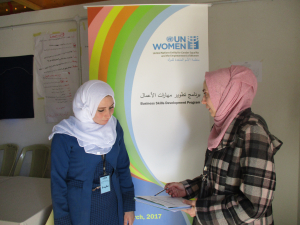
The non-formal education (NFE) program offers alternative opportunities to formal education for out-of-school children, adolescents, and youth, as well as for learners who have learning difficulties.
- Catch-Up Education Program
- Remedial Classes
- Accelerated Education Programme
- Psychosocial Support and Healing Classrooms
Read More...
Training
SRD Center provides innovative training programs tailored to meet the specific needs of humanitarian response and development programs to multiple UN agencies, INGOs, foundations, and NGOs. We employ a full range of strategic planning, monitoring, and organizational development tools to help our clients manage for results. Using a collaborative approach, we design implementation plans, establish and track performance metrics, and build human and institutional capacity to advance development effectiveness. Our training courses are available in an online format and on-site (in Amman – Jordan), and in two languages: English and Arabic. We deliver our online courses via Zoom Pro and Interactive Webinar Workshops to facilitate learning, business like and enjoyable in style and nature with lots of examples, case histories, problem solving exercises and useful ‘tips & tools’ from experienced practitioners in this field.
Vocational education
SRD Center specialized in designing and delivering the following vocational training courses:
Medical Office Admin training curriculum (MOA)
Healthcare of Elderly People training curriculum (HSW)
Medical Items Delivery Agent training curriculum (MID)
Read More...
Health Sector
- Measuring and evaluating abilities and intelligence
- Child protection and development
- Intelligence examination and mental abilities assessment
- Diagnosis of early disabilities and learning difficulties
- Special education
- Family Health Care
End of Project Evaluation
We conduct rigorous impact evaluations of humanitarian and development programs to determine their effectiveness, efficiency, impact, and sustainability and to provide recommendations, identifying promising practices for learning. Based on OECD DAC evaluation criteria, our experts design experimental and quasi-experimental evaluations using qualitative and quantitative research methods to test what approaches work best and why. SRD Center also conducts large-scale surveys to assess development indicators or to inform program and evaluation design.
Labor Market Assessment
SRD Center assesses existing skills and opportunities in the labor market to help organizations tailor trainings and other livelihoods interventions. Special consideration is given to special needs for supporting women and men from urban and rural settings particularly young women, returning migrant workers, young workers in rural economies, refugees, persons with disabilities, and other groups with special needs.
SRD Center conducts labor market assessments for livelihoods protection and youth employment programs in response to poverty and unemployment in refugees and other vulnerable communities. Our labor market assessment approach focuses on:
- Major changes in employment demand in target populations
- Skills development / Vocational Training to align it with changing labour market demands.
- Enterprise resilience and development: analyze effects of conflicts and COVID-19 economic consequences on business environment - both for the existing Enterprises as well as for new business start-ups, assess the new opportunities, challenges and identify solutions to support young entrepreneurs for starting their enterprising activities.
- Employments through Employment-Intensive approaches: analyze the most vulnerable groups and identify avenues to start ‘employment-intensive approaches’ in different economic sectors including agriculture, construction, sanitary infrastructure, community service, health/education service, care-economy, livelihoods, and others - for offering short-to medium term employments to the vulnerable groups.
Read More...
Training Courses
SRD Center provides innovative training programs tailored to meet the specific needs of humanitarian response and development programs to multiple UN agencies, INGOs, foundations, and NGOs. We employ a full range of strategic planning, monitoring, and organizational development tools to help our clients manage for results. Using a collaborative approach, we design implementation plans, establish and track performance metrics, and build human and institutional capacity to advance development effectiveness. Our training courses are available in an online format and on-site (in Amman – Jordan), and in two languages: English and Arabic. We deliver our online courses via Zoom Pro and Interactive Webinar Workshops to facilitate learning, business like and enjoyable in style and nature with lots of examples, case histories, problem solving exercises and useful ‘tips & tools’ from experienced practitioners in this field.
Read More...