
Qasem Newashi
Circular Economy and Green Work Practices in Factories
Organizer: SRD Center | SRD Green Academy
Status: Ongoing programme available on request
Course code: SRD CE14
Three Day Instructor Led Workshop
Delivery mode: Face-to-face or live online, subject to agreement
Duration: Three days, 18 contact hours
Languages: Available in both English and Arabic
Dates: Scheduled by agreement with the requesting organization
Target countries: Middle East and North Africa (MENA)
Delivery locations: Jordan, Iraq, Libya, Syria, Yemen and other MENA countries, subject to agreement and local adaptation
Course Overview
SRD Green Academy offers a practical training programme to help factory teams identify resource losses, apply circular economy principles and improve everyday work practices. Participants explore ways to reduce avoidable water, energy and material use while maintaining product quality and safe working conditions.
Developed for the Jordanian industrial context, the course uses factory examples, guided calculations and workplace scenarios. Participants prepare a measurable improvement proposal and a 90-day implementation plan. The content can be adapted to other MENA countries, industrial sectors and organizational priorities.
Recommended for
- Factory supervisors, production staff and operators
- Maintenance, quality, procurement and environmental teams
- SME owners, industrial associations and chambers of industry
- TVET trainers and industrial workforce-development programmes
- NGOs, donors and public institutions supporting green skills, enterprise development and sustainable livelihoods
No prior knowledge of Life Cycle Assessment (LCA) is required. Familiarity with a production process is helpful; guided support is provided for basic calculations.
Training Objective
The objective is to equip factory teams with practical green skills to recognize resource losses, assess improvement options and introduce repeatable work practices supported by measurable evidence.
By the end of the workshop, participants will be better able to:
- Explain circular economy principles and choose options for prevention, maintenance, reuse and recycling
- Map factory inputs and outputs and identify unexplained material losses
- Identify practical improvements in water use, energy use and material yield
- Assess waste segregation, storage and handling arrangements
- Evaluate purchasing, returnable packaging and circular partnership options
- Calculate resource indicators, estimated net savings and simple payback
- Prepare a clear green work instruction and communicate it to colleagues
- Develop a 90-day factory improvement plan with responsibilities, approvals and monitoring measures
Main Training Topics
Day One Circular Economy and Factory Resource Flows
- Circular economy principles and their application in Jordanian factories
- Preventing waste and keeping materials, products and equipment useful
- Process mapping, material balances, production yield and resource losses
- Factory observation, waste segregation and traceable handling practices
Day Two Practical Resource Efficiency and Circular Solutions
- Water use, cleaning practices, leak prevention and controlled improvement trials
- Energy use, equipment operating routines and maintenance responsibilities
- Material yield, defect prevention and evidence-based purchasing
- Returnable packaging, reuse systems and partnerships between factories
Day Three Green Work Practices and Implementation Planning
- Resource indicators, savings estimates and investment choices
- Standard work instructions, toolbox talks and staff participation
- Factory improvement planning with 30-, 60- and 90-day milestones
- Individual knowledge and practical assessments and workplace follow-up planning
Training Methodology
The programme uses a participatory, practical adult-learning approach, including:
- Interactive presentations and examples from industrial operations
- Factory simulations, process mapping and observation exercises
- Guided calculations using illustrative production and utility records
- Group problem solving, supplier role play and peer review
- Green work instruction practice and short toolbox talks
- Pre-course checks, individual assessments and action planning
Examples can be adapted to food processing, plastics and packaging, chemicals, stone processing, garments and other manufacturing sectors. Learning support and delivery arrangements can be tailored to participants’ roles and needs. An optional factory visit may be arranged subject to site approval and appropriate supervision.
Workshop Outputs
Participants will receive or develop:
- Three days of instructor-led training and SRD learning materials
- Practical worksheets for resource mapping, observations and calculations
- A draft green work instruction and resource-monitoring indicators
- An individual factory improvement proposal and 90-day action plan
- Feedback on individual knowledge and practical assessments
The contracting organization may also receive attendance and assessment summaries, a workshop report and recommendations for follow-up support, subject to the agreed scope.
SRD Certificate
Participants who attend at least 17 of the 18 contact hours and achieve at least 70% in each individual assessment receive an SRD Green Academy Certificate of Successful Completion. Proposals must also meet the course’s safety and quality requirements. An attendance statement records participation where the successful-completion requirements are not yet met.
The certificate records completion of an SRD course. It does not confer external accreditation, factory or product certification, or export eligibility.
Group Size and Fee Information
Recommended group size: 20 to 24 participants.
Fees are provided upon request and depend on delivery location, delivery mode, language arrangements, customization, venue, travel, participant numbers and the number of workshops requested.
Organizational Bookings Customization and Partnerships
Factories, business associations, TVET institutions, NGOs and other organizations interested in purchasing or customizing this programme are invited to submit an enquiry outlining their target participants, sector, country, preferred language, delivery mode, dates and expected outcomes.
Organizations seeking to become authorized SRD partners to market and deliver the programme in their country should provide a brief organizational profile, examples of relevant circular economy, resource efficiency, green skills or industrial training assignments, and selected client references.
Suitable applicants will be invited to an introductory meeting to discuss the cooperation model, responsibilities, commercial arrangements, quality standards and next steps toward a partnership agreement.
How to Register or Enquire
For individual participation, organizational bookings, customization or partnership enquiries, contact:
This email address is being protected from spambots. You need JavaScript enabled to view it.
Please use the subject line “Circular Economy and Green Work Practices in Factories” and indicate your preferred training language: English or Arabic.
Green Jobs Index (GJI)
Green Jobs Index (GJI)
The Green Jobs Index is a proposed global index designed to track how employment, recruitment and investment contribute to environmental sustainability. It provides a common framework for understanding the role of work in the transition to a greener economy.
Country comparisons
Explore GJI
The planned GJI data platform will bring together country profiles, annual trends and the three component indicators. Comparisons will cover countries and years with sufficiently consistent definitions and data.
Data links
-
Methodology and technical notes
-
Calculation workbook
-
Country datasets
About the Green Jobs Index
The GJI examines three aspects of the green employment transition: the share of existing employment linked to environmental activities, the share of recruitment into those activities, and the share of public capital spending allocated to eligible environmental purposes. Together, these measures describe the employment base, current hiring activity and investment supporting future activity.
Green-related work includes activities that reduce emissions and pollution, improve energy and resource efficiency, protect biodiversity, conserve natural resources and strengthen resilience to climate change. These activities can occur across the economy, including within businesses whose principal products or services are not environmental.
The employment dimension estimates green-related employment as a proportion of total employment. The recruitment dimension measures the estimated green share of people entering jobs. The investment dimension measures eligible green capital expenditure as a proportion of total capital expenditure within a consistent public-budget boundary. Private investment and programme results provide additional evidence where comparable information is available.
The three indicators are expressed as fractions between zero and one and combined with equal weights using a geometric mean. The resulting GJI score ranges from zero to 100.
GJI=100×(S×H×K)1/3GJI=100\times(S\times H\times K)^{1/3}
S represents the employment share, H the recruitment share and K the public capital expenditure share. Technical notes explain the classification, estimation and aggregation procedures.
Understanding GJI Results
The GJI is intended to help governments, employers, training institutions and development partners examine how green investment and labour-market activity align. Comparing the component indicators can identify where skills development, recruitment support or investment policy may warrant closer attention.
Higher scores indicate a stronger combined presence of green-related employment, recruitment and public capital spending within the measured economy. The score is not the percentage of jobs that are green. Employment counts, expenditure amounts and individual component results are needed to understand the scale and direction of change.
The index does not establish exact numbers of jobs created, retained or saved. Recruitment may include replacement hires, while investment may support temporary or future work. Reported job creation, retention, advertised vacancies and prospective employment should therefore accompany the score as separate measures.
Decent working conditions and equitable access remain essential to green employment. Where these conditions cannot be verified, estimates are identified as green-related employment. Additional information on wages, social protection, safety and inclusion is needed to assess the quality of work.
GJI Dimensions and Indicators
| Dimension | Indicator |
|---|---|
| Employment — S | Estimated green-related employment ÷ total employment |
| Recruitment — H | Estimated green-related job entries ÷ all job entries |
| Public investment — K | Eligible green capital expenditure ÷ total capital expenditure within the same public-budget boundary |
Data Sources and Estimation
The proposed methodology draws on regularly published labour statistics, budget execution reports, company disclosures and environmental programme records. Job advertisements provide further evidence of recruitment demand.
AI-assisted analysis can help classify activities and occupations, supported by source documentation and human review. Published results should distinguish observed statistics from modelled estimates and identify their coverage and uncertainty.
Downloads and Documentation
Read the methodology and use the calculation workbook to examine the indicators, assumptions and formulas. Country datasets and accompanying source notes are planned for publication as results are validated.
Green Employment News
Research and updates on green employment, skills demand and investment, including future GJI releases and methodology developments.
Green Employment and Green Skills Labour-Market Assessment Training
Five-Day Technical Training Workshop
Delivery mode: Face-to-face or live online, instructor-led training
Duration: Five days
Language: Arabic or English, as required
Target countries: All Middle East and North Africa (MENA) countries
Delivery locations: Jordan, Iraq, Libya, Syria, Yemen, and other MENA countries, subject to agreement
Course Overview
This technical programme builds the capacity of researchers, institutions, and development practitioners to assess current and future demand for green employment, occupations, tasks, and skills. It links environmental and economic change with employer demand, workforce supply, training provision, inclusion, and decent-work considerations.
Participants learn to define the assessment scope, select sectors and occupations, design mixed-method tools, engage employers and training providers, analyse evidence, and convert findings into actionable recommendations for policy, TVET, employment services, and donor programming.
Recommended for
The programme is recommended for:
- Ministries of labour, environment, planning, education, and industry
- TVET authorities, universities, and training providers
- Labour-market observatories and research organizations
- Donor, UN, NGO, and development-programme teams
- Chambers, employer organizations, and trade unions
- Consultants, enumerators, analysts, and monitoring specialists
Training Objective
The objective is to enable participants to design and conduct credible green labour-market assessments that inform employment policy, skills development, career guidance, and investment decisions.
By the end of the workshop, participants will be better able to:
- Define green employment, green occupations, green tasks, and green skills for assessment purposes
- Translate environmental and economic trends into research questions
- Prioritize sectors, occupations, locations, and population groups
- Design employer, worker, training-provider, KII, and FGD tools
- Develop feasible sampling and stakeholder-engagement plans
- Analyse demand, supply, skills gaps, inclusion, and decent-work evidence
- Validate findings and manage limitations responsibly
- Produce clear, prioritized, and institutionally assigned recommendations
Main Training Topics
Day One: Green Labour-Market Concepts and Assessment Design
- Concepts and operational definitions
- Green transition drivers and sector selection
- Occupation, task, and skills frameworks
- Assessment questions, scope, and stakeholder mapping
- Inclusion, informality, and decent-work dimensions
- Secondary data and evidence review
- Drafting the assessment framework
Day Two: Data-Collection Methods and Sampling
- Employer and worker surveys
- Training-provider assessments
- Key-informant interviews and focus groups
- Sampling, access, consent, and data quality
Day Three: Indicators, Tool Piloting, and Fieldwork Planning
- Demand and supply indicators
- Piloting and revising tools
- Preparing a fieldwork plan
Day Four: Data Analysis and Stakeholder Validation
- Quantitative and qualitative analysis
- Identifying occupations, tasks, shortages, and skills gaps
- Interpreting evidence under uncertainty
- Triangulation and stakeholder validation
Day Five: Recommendations, Reporting, and Assessment Workplanning
- Translating findings into policy and programme options
- Report structure and communication of limitations
- Preparing an assessment workplan and recommendation framework
Training Methodology
The programme uses a participatory, practical, and adult-learning approach. The methodology includes:
- Technical presentations
- Assessment-framework design
- Questionnaire and interview-tool exercises
- Sampling and stakeholder-mapping practice
- Data interpretation exercises
- Recommendation-development groups
- Peer review and facilitator feedback
The content can be adapted to participants' occupations, literacy levels, target sectors, project activities, country context, and organizational priorities.
Workshop Outputs
Participants will receive:
- Five days of technical training
- Green labour-market assessment framework
- Draft data-collection tools
- Fieldwork and analysis workplan
- Certificate of participation, subject to agreement
The contracting organization may also receive:
- Attendance and assessment results
- Consolidated draft tools
- Workshop report
- Recommendations for completing or commissioning an assessment
Group Size and Fee Information
Recommended group size: 10 to 20 participants.
Fees are provided upon request and depend on delivery location, duration, language, customization, venue, travel, participant numbers, and the number of workshops requested.
Organizational Bookings, Customization and Partnerships
Organizations interested in purchasing or customizing this programme should submit an enquiry outlining their requirements. Organizations seeking to become authorized SRD partners to market and deliver the programme in their country should also provide a brief organizational profile, examples of relevant environmental, green-employment, green-skills, or green-economy training assignments, and selected client references. Suitable applicants will be invited to an introductory meeting to discuss the cooperation model, responsibilities, commercial arrangements, quality standards, and next steps toward signing a partnership agreement.
How to Register or Enquire
Training, organizational, and partnership enquiries: trainingThis email address is being protected from spambots. You need JavaScript enabled to view it.
Green Economy Entrepreneurship and Sustainable Business Development Training
Four-Day Business Development Workshop
Delivery mode: Face-to-face or live online, instructor-led training
Duration: Four days
Language: Arabic or English, as required
Target countries: All Middle East and North Africa (MENA) countries
Delivery locations: Jordan, Iraq, Libya, Syria, Yemen, and other MENA countries, subject to agreement
Course Overview
This programme supports entrepreneurs and SMEs to identify commercially viable opportunities within the green economy and to improve the sustainability of new or existing businesses. It covers green products and services, circular business models, resource efficiency, customer demand, responsible marketing, and enterprise resilience.
Participants work step by step from opportunity identification to a practical business concept. The programme can be adapted to youth enterprises, women's businesses, livelihood projects, cooperatives, start-ups, and SMEs in agriculture, food, water, energy, waste, repair, tourism, transport, construction, and other sectors.
Recommended for
The programme is recommended for:
- Aspiring entrepreneurs and start-up teams
- Existing SMEs seeking greener products, services, or operations
- Youth, women, refugee, and returnee enterprise programmes
- Business-development service providers, incubators, and accelerators
- Cooperatives, producer groups, and social enterprises
- Livelihood, innovation, and private-sector development programmes
Training Objective
The objective is to enable participants to design or strengthen commercially realistic businesses that solve environmental problems, use resources efficiently, and create decent green employment.
By the end of the workshop, participants will be better able to:
- Identify green-economy problems that can become business opportunities
- Define target customers and test the value proposition
- Distinguish genuine environmental value from unsupported green claims
- Design a resource-efficient and circular business model
- Estimate key costs, revenues, partners, and operational requirements
- Identify green skills and jobs required by the enterprise
- Assess environmental, market, and implementation risks
- Prepare and present a concise green business concept
Main Training Topics
Day One: Green Economy Opportunities and Customers
- Green-economy needs, market failures, and business opportunities
- Local environmental problems and underserved customers
- Sector and value-chain opportunity mapping
- Customer discovery and problem validation
- Inclusive opportunities for women, youth, and vulnerable groups
- Responsible environmental claims and market credibility
- Selecting a priority business idea
Day Two: Sustainable Business Model Design
- Green value propositions, products, and services
- Circularity, repair, reuse, sharing, and waste-to-value models
- Resource-efficient operations and supply chains
- Key activities, partners, technologies, and green skills
- Cost structure, pricing, revenue, and financial assumptions
- Environmental and social impact indicators
- Drafting the green business model
Day Three: Feasibility, Funding Readiness, and Pilot Design
- Testing technical and market feasibility
- Risks, permits, safeguards, and implementation barriers
- Funding readiness and communication with financiers
- Pilot design and minimum viable offer
Day Four: Green Employment, Action Planning, and Pitching
- Green employment and team-development plan
- Ninety-day enterprise action plan
- Business concept presentations and feedback
Training Methodology
The programme uses a participatory, practical, and adult-learning approach. The methodology includes:
- Green opportunity mapping
- Customer and stakeholder exercises
- Business-model development
- Sector examples and case studies
- Cost and risk analysis
- Peer review and pitching
- Pre- and post-training assessments
The content can be adapted to participants' occupations, literacy levels, target sectors, project activities, country context, and organizational priorities.
Workshop Outputs
Participants will receive:
- Four days of instructor-led training
- Green business development tools
- Draft green business model
- Ninety-day action plan and short pitch
- Certificate of participation, subject to agreement
The contracting organization may also receive:
- Attendance and assessment results
- Summary of business concepts
- Workshop report
- Recommendations for coaching, incubation, or technical support
Group Size and Fee Information
Recommended group size: 15 to 25 participants.
Fees are provided upon request and depend on delivery location, duration, language, customization, venue, travel, participant numbers, and the number of workshops requested.
Organizational Bookings, Customization and Partnerships
Organizations interested in purchasing or customizing this programme should submit an enquiry outlining their requirements. Organizations seeking to become authorized SRD partners to market and deliver the programme in their country should also provide a brief organizational profile, examples of relevant environmental, green-employment, green-skills, or green-economy training assignments, and selected client references. Suitable applicants will be invited to an introductory meeting to discuss the cooperation model, responsibilities, commercial arrangements, quality standards, and next steps toward signing a partnership agreement.
How to register or enquire
Training, organizational, and partnership enquiries: trainingThis email address is being protected from spambots. You need JavaScript enabled to view it.
Green Employment: Greening Existing Jobs and Businesses Training
Three-Day Practical Workplace Workshop
Delivery mode: Face-to-face or live online, instructor-led training
Duration: Three days
Language: Arabic or English, as required
Target countries: All Middle East and North Africa (MENA) countries
Delivery locations: Jordan, Iraq, Libya, Syria, Yemen, and other MENA countries, subject to agreement
Course Overview
Most workers will contribute to the green transition through changes to existing jobs rather than by moving into entirely new occupations. This programme helps businesses and workers identify how everyday roles - including technical, administrative, operational, procurement, transport, hospitality, agricultural, and facility-management roles - can become greener.
The workshop connects environmental improvement with cost control, productivity, safety, quality, employability, and business resilience. Participants map job tasks and workplace practices, identify achievable improvements, and assign clear responsibilities for implementation.
Recommended for
The programme is recommended for:
- SMEs and companies seeking practical environmental improvements
- Workers, supervisors, technicians, and frontline teams
- HR, operations, procurement, facilities, and quality staff
- Business-development and enterprise-support programmes
- Work-based learning, apprenticeship, and employability programmes
- Public institutions, municipalities, and service providers
Training Objective
The objective is to help organizations green existing jobs and business processes by integrating practical environmental responsibilities into roles, tasks, supervision, and workplace performance.
By the end of the workshop, participants will be better able to:
- Explain how existing jobs can be greened without changing their core purpose
- Map environmental responsibilities within different job roles
- Identify waste, resource loss, pollution, and workplace risks
- Propose practical improvements to job tasks and operating procedures
- Connect greener work practices with productivity, quality, and safety
- Define supervisor and worker responsibilities for green performance
- Select simple indicators for monitoring improvement
- Prepare job-level and business-level greening commitments
Main Training Topics
Day One: Mapping Jobs, Tasks, and Environmental Impacts
- What it means to green an existing job or business
- Mapping tasks, materials, equipment, and resource use
- Identifying environmental risks and inefficient practices
- Green responsibilities in technical and non-technical roles
- Employee participation, decent work, and workplace safety
- Business benefits and common implementation barriers
- Selecting priority jobs and processes for improvement
Day Two: Redesigning Work Practices and Business Processes
- Improving job descriptions, routines, and standard procedures
- Reducing energy, water, materials, and waste
- Greener procurement, transport, maintenance, and facilities
Day Three: Coaching, Performance, and Workplace Action Planning
- Supervisor coaching and employee accountability
- Green performance indicators and recognition
- Preparing team commitments and quick wins
- Developing a workplace greening action plan
Training Methodology
The programme uses a participatory, practical, and adult-learning approach. The methodology includes:
- Job and task-mapping exercises
- Workplace scenarios
- Process walk-throughs
- Problem-solving groups
- Cost-and-impact prioritization
- Team commitments and action planning
- Pre- and post-training assessments
The content can be adapted to participants' occupations, literacy levels, target sectors, project activities, country context, and organizational priorities.
Workshop Outputs
Participants will receive:
- Three days of practical training
- Job-greening and workplace assessment tools
- Role-specific improvement ideas
- Team or business action plan
- Certificate of participation, subject to agreement
The contracting organization may also receive:
- Attendance and assessment results
- Summary of priority roles and processes
- Workshop report
- Recommendations for SOP, job-description, or policy updates
Group Size and Fee Information
Recommended group size: 15 to 25 participants.
Fees are provided upon request and depend on delivery location, duration, language, customization, venue, travel, participant numbers, and the number of workshops requested.
Organizational Bookings, Customization and Partnerships
Organizations interested in purchasing or customizing this programme should submit an enquiry outlining their requirements. Organizations seeking to become authorized SRD partners to market and deliver the programme in their country should also provide a brief organizational profile, examples of relevant environmental, green-employment, green-skills, or green-economy training assignments, and selected client references. Suitable applicants will be invited to an introductory meeting to discuss the cooperation model, responsibilities, commercial arrangements, quality standards, and next steps toward signing a partnership agreement.
How to register or enquire
Training, organizational, and partnership enquiries: trainingThis email address is being protected from spambots. You need JavaScript enabled to view it.
Green Economy Practices Across Business Sectors Training
Three-Day Customizable, Sector-Focused Workshop
Delivery mode: Face-to-face or live online, instructor-led training
Duration: Three days
Language: Arabic or English, as required
Target countries: All Middle East and North Africa (MENA) countries
Delivery locations: Jordan, Iraq, Libya, Syria, Yemen, and other MENA countries, subject to agreement
Course Overview
This programme helps organizations translate green-economy principles into practical improvements across business sectors. It can be customized for construction, agriculture, fisheries, manufacturing, tourism, transport, logistics, energy, water, waste management, education, healthcare, retail, and other sectors.
Participants examine their sector's environmental footprint, resource costs, risks, market pressures, and opportunities. They then identify realistic measures that can improve efficiency, resilience, compliance, worker participation, and the environmental value of products and services.
Recommended for
The programme is recommended for:
- Private companies, SMEs, cooperatives, and business associations
- Sector ministries, municipalities, and public-service institutions
- Chambers of commerce and industry
- Sector development, value-chain, and livelihood programmes
- Managers responsible for operations, quality, procurement, or sustainability
- TVET institutions and organizations designing sector-specific green-skills programmes
Training Objective
The objective is to enable organizations and sector stakeholders to identify commercially and operationally realistic green-economy practices and convert them into prioritized actions.
By the end of the workshop, participants will be better able to:
- Explain green-economy principles in relation to the selected sector
- Map key resource flows, environmental impacts, and business risks
- Identify sector-specific green employment and skills implications
- Recognize opportunities for efficiency, circularity, and cleaner production
- Review suppliers, procurement, transport, and value-chain practices
- Select practical environmental and business performance indicators
- Prioritize feasible short-, medium-, and long-term improvements
- Prepare a sector or organizational green-economy action plan
Main Training Topics
Day One: Green Economy Principles and Sector Diagnosis
- Green-economy concepts, business value, and sector relevance
- Environmental footprint and resource-flow mapping
- Energy, water, materials, waste, emissions, and pollution risks
- Green employment and changing skills requirements
- Regulatory, client, donor, and supply-chain expectations
- Sector examples and good practices
- Identifying priority problems and opportunities
Day Two: Sector Solutions and Green Work Practices
- Resource efficiency, circularity, and cleaner production options
- Sustainable procurement and supplier engagement
- Greener transport, logistics, facilities, and maintenance
- Worker engagement and green-skills development
Day Three: Prioritization and Implementation Planning
- Cost, feasibility, risk, and impact prioritization
- Selecting indicators and assigning responsibilities
- Preparing a sector or organizational action plan
Training Methodology
The programme uses a participatory, practical, and adult-learning approach. The methodology includes:
- Customized sector presentations
- Resource-flow and environmental-footprint mapping
- Sector case studies
- Group problem solving
- Opportunity prioritization exercises
- Action planning
- Pre- and post-training assessments
The content can be adapted to participants' occupations, literacy levels, target sectors, project activities, country context, and organizational priorities.
Workshop Outputs
Participants will receive:
- Three days of customized sector training
- Sector-specific green-economy materials
- Environmental and resource opportunity map
- Prioritized action plan
- Certificate of participation, subject to agreement
The contracting organization may also receive:
- Attendance and assessment results
- Summary of sector priorities
- Workshop report
- Recommendations for technical assistance or further assessment
Group Size and Fee Information
Recommended group size: 15 to 25 participants.
Fees are provided upon request and depend on delivery location, duration, language, customization, venue, travel, participant numbers, and the number of workshops requested.
Organizational Bookings, Customization and Partnerships
Organizations interested in purchasing or customizing this programme should submit an enquiry outlining their requirements. Organizations seeking to become authorized SRD partners to market and deliver the programme in their country should also provide a brief organizational profile, examples of relevant environmental, green-employment, green-skills, or green-economy training assignments, and selected client references. Suitable applicants will be invited to an introductory meeting to discuss the cooperation model, responsibilities, commercial arrangements, quality standards, and next steps toward signing a partnership agreement.
How to register or enquire
Training, organizational, and partnership enquiries: trainingThis email address is being protected from spambots. You need JavaScript enabled to view it.
Green Employment and Green Skills for Emerging and Existing Jobs Training
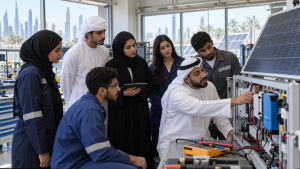
Green Employment and Green Skills for Emerging and Existing Jobs Training
Status: Ongoing programme
Format: Three-Day Instructor-Led Workshop
Delivery mode: Face-to-face or live online, instructor-led training
Duration: Three days
Language: Arabic or English, as required
Target countries: All Middle East and North Africa (MENA) countries
Delivery locations: Jordan, Iraq, Libya, Syria, Yemen, and other MENA countries, subject to agreement
Course Overview
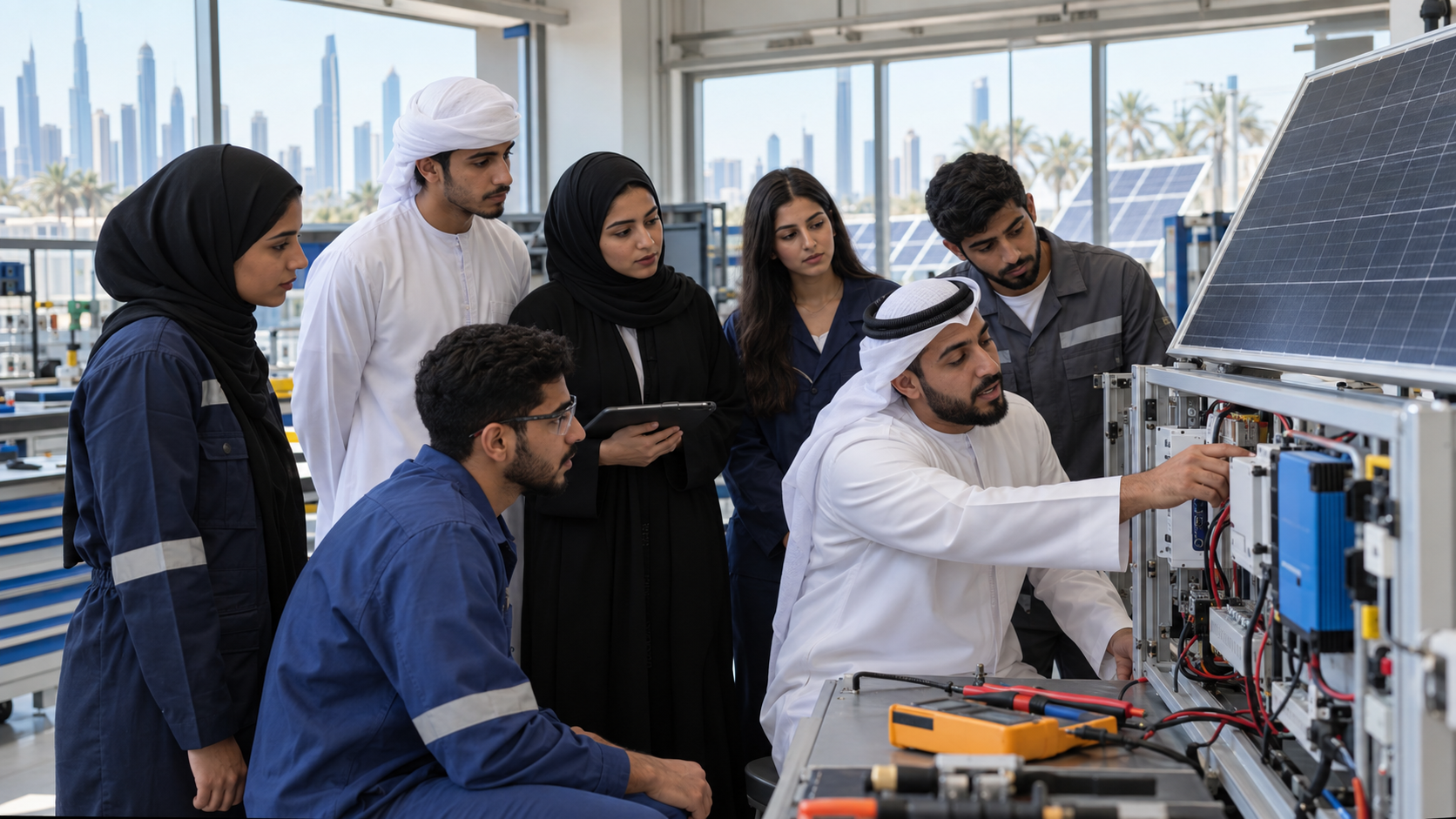
This programme prepares jobseekers and existing workers to understand how the transition to a green economy is changing occupations, tasks, and employer expectations. It distinguishes new green occupations from the greening of existing jobs and connects environmental responsibility with employability, decent work, productivity, and resilient livelihoods.
Participants identify the green skills required in their target sectors, assess their own strengths and gaps, and prepare practical development plans. The content can be adapted to national priorities, occupations, sectors, and the needs of women, youth, refugees, persons with disabilities, and other groups facing labour-market barriers.
Recommended for:
The programme is recommended for:
- Jobseekers, graduates, and workers seeking career progression
- Youth, women, refugees, returnees, and host-community livelihood programmes
- TVET institutions, universities, and career-guidance services
- Employment, apprenticeship, and work-based learning programmes
- Employers, HR teams, business associations, and trade unions
- Government, donor, and NGO workforce-development programmes
Training Objective
The objective is to help participants understand green employment trends, recognize how occupations are changing, and build transferable and technical green skills that improve their readiness for emerging and existing jobs.
By the end of the workshop, participants will be better able to:
- Explain green employment, green jobs, green occupations, and the greening of existing jobs
- Identify environmental and labour-market drivers changing work
- Recognize green skills required across different sectors and occupations
- Assess personal skills, experience, and priority development gaps
- Translate environmental responsibility into credible employability evidence
- Identify training, work-based learning, and career pathways
- Demonstrate green workplace behaviours valued by employers
- Prepare an individual or organizational green-skills action plan
Main Training Topics
Day One: Green Employment and Changing Skills Demand
- The green economy and its implications for employment and livelihoods
- Green jobs, green occupations, and green tasks within conventional jobs
- Sector trends and examples from the MENA region
- Core environmental, technical, digital, and transferable green skills
- Decent work, inclusion, and a just transition
- Employer expectations and evidence of green competence
- Personal green-skills self-assessment
Day Two: Career Pathways and Employability Practice
- Mapping target occupations and green career pathways
- Identifying skills gaps and learning priorities
- Building green experience through projects and work-based learning
- Presenting green skills in CVs, interviews, and workplace discussions
Day Three: Workplace Problem Solving and Skills Action Planning
- Green problem solving, teamwork, and workplace responsibility
- Barriers affecting women, youth, and vulnerable groups
- Preparing an individual or programme-level green-skills action plan
Training Methodology
The programme uses a participatory, practical, and adult-learning approach. The methodology includes:
- Interactive presentations and labour-market examples
- Occupation and task-mapping exercises
- Green-skills self-assessment
- Group discussions and workplace scenarios
- Career-pathway mapping
- Individual and team action planning
- Pre- and post-training assessments
The content can be adapted to participants' occupations, literacy levels, target sectors, project activities, country context, and organizational priorities.
Workshop Outputs
Participants will receive:
- Three days of instructor-led training
- Green-employment and green-skills learning materials
- Personal green-skills self-assessment
- Career or skills-development action plan
- Certificate of participation, subject to agreement
The contracting organization may also receive:
- Attendance and assessment results
- Summary of identified skills gaps
- Workshop report
- Recommendations for follow-up training or employment support
Group Size and Fee Information
Recommended group size: 15 to 25 participants.
Fees are provided upon request and depend on delivery location, duration, language, customization, venue, travel, participant numbers, and the number of workshops requested.
Organizational Bookings, Customization and Partnerships
Organizations interested in purchasing or customizing this programme should submit an enquiry outlining their requirements. Organizations seeking to become authorized SRD partners to market and deliver the programme in their country should also provide a brief organizational profile, examples of relevant environmental, green-employment, green-skills, or green-economy training assignments, and selected client references. Suitable applicants will be invited to an introductory meeting to discuss the cooperation model, responsibilities, commercial arrangements, quality standards, and next steps toward signing a partnership agreement.
How to register or enquire:
Training, organizational, and partnership enquiries: trainingThis email address is being protected from spambots. You need JavaScript enabled to view it.
Labour Market Training and Post-Employment Services – AVSI Cash for Work Project - Rihab and Djeineh, Mafraq - Jordan
SRD Center Completes Labour Market and Employability Training in Mafraq
Mafraq, Jordan
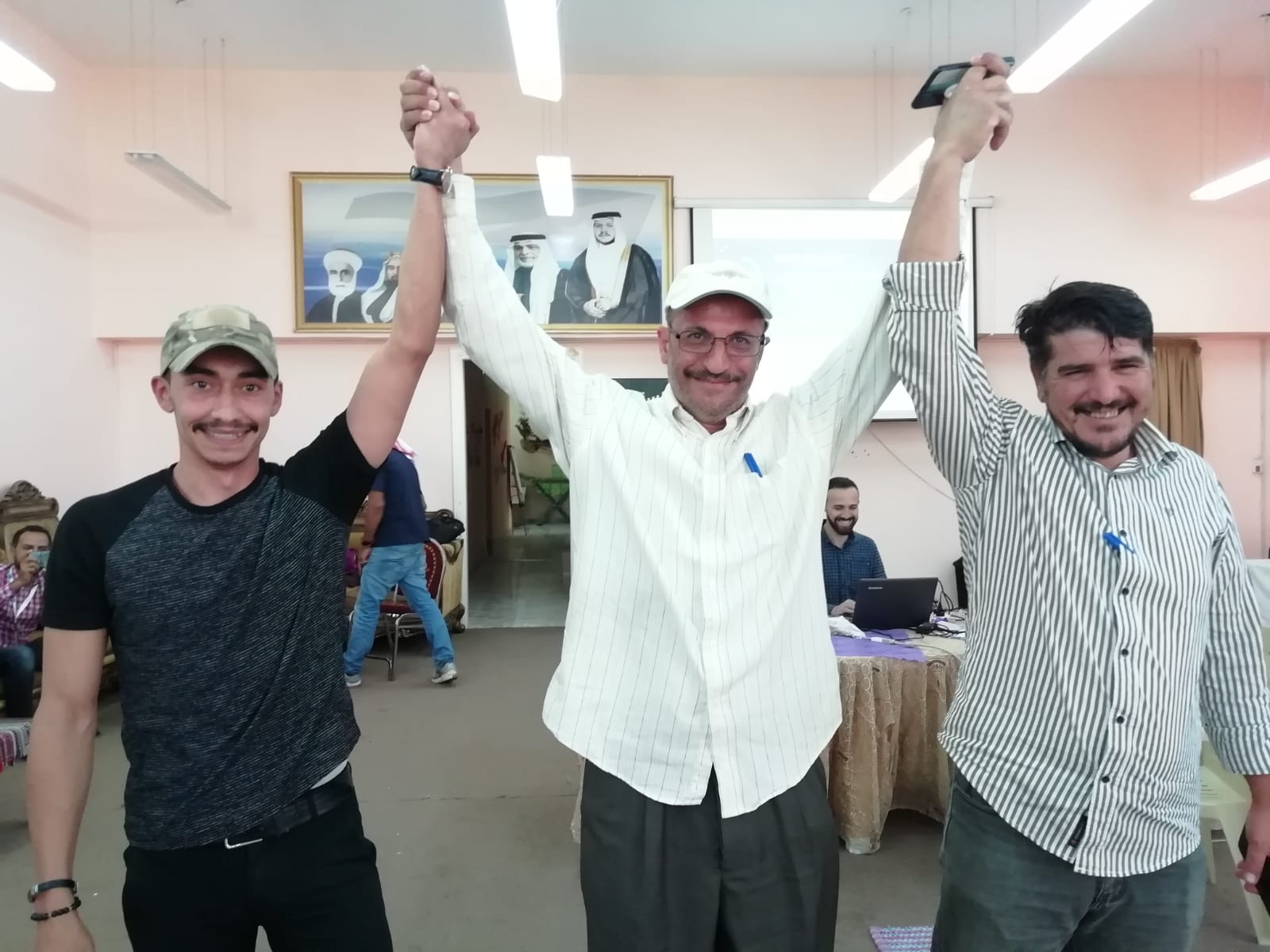
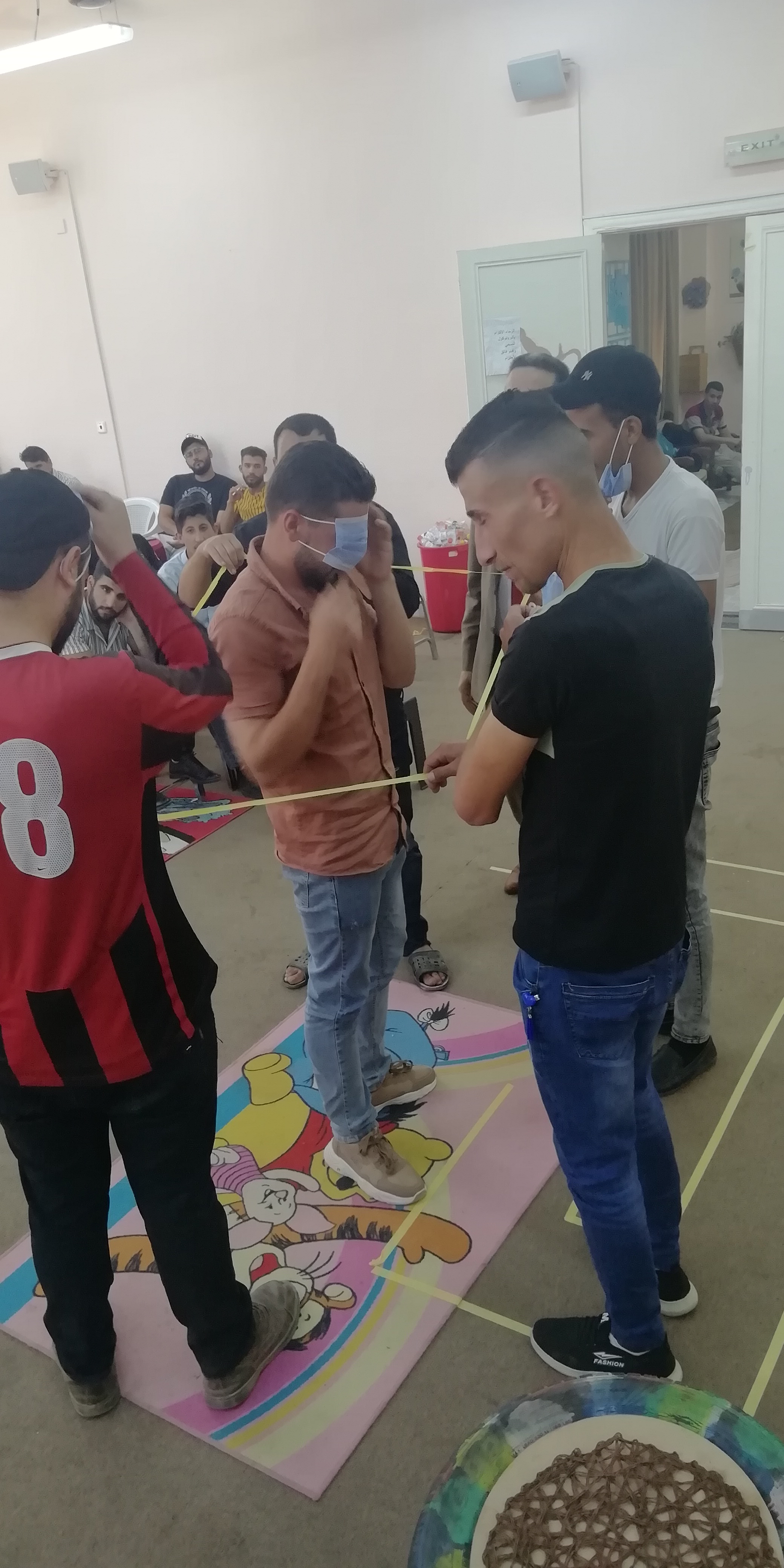
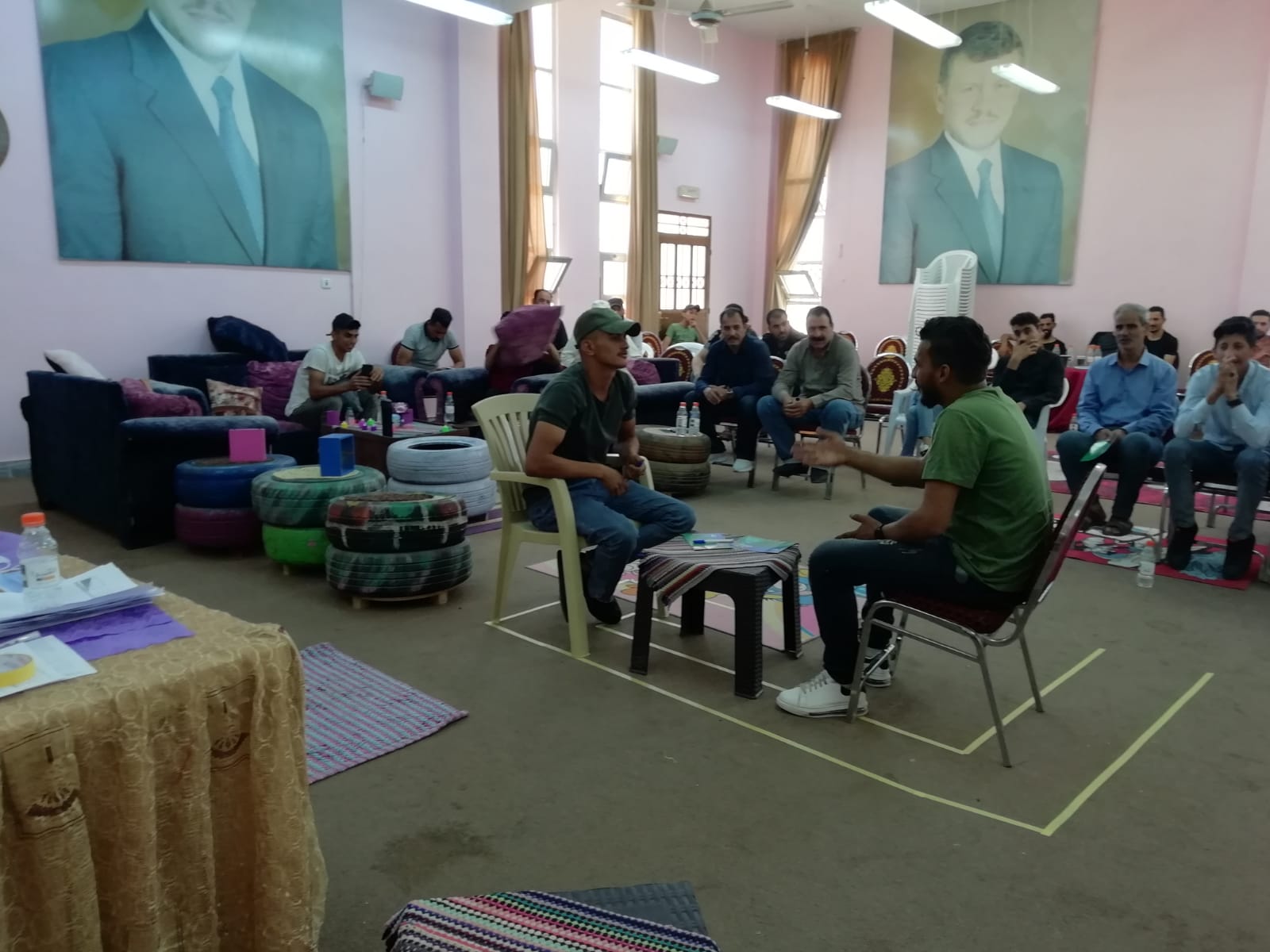
SRD Center has completed a labour market orientation and post-employment training programme for Jordanian and Syrian cash workers in Rihab and Djeineh, Mafraq Governorate. The training was delivered for AVSI Foundation under its Cash for Work project.
The programme reached more than 300 participants and aimed to strengthen their employability, workplace readiness, and ability to access sustainable and decent income-generating opportunities.
Participants completed eight core training modules, representing approximately 16 training hours per group. The programme covered self-awareness and employability skills, local employment opportunities, career planning, work ethics, CV preparation, job interviews, job-search methods, job applications, workplace communication, time management, and job retention.
The sessions were delivered in Arabic using participatory and practical approaches, including self-assessment exercises, group discussions, peer learning, role-plays, case studies, interview simulations, CV drafting, and individual job-search action plans. The trainers adapted the activities to participants’ different educational backgrounds, work experience, and learning needs.
The practical exercises—particularly CV preparation, interview role-play, and job-search planning—generated strong participant engagement and helped participants produce practical tools that can support their transition to employment.
The final report highlights the importance of linking employability training with continued employer engagement, job referrals, vocational training opportunities, and individual follow-up. It recommends maintaining an updated network of local employers, vocational training centres, cooperatives, and business associations, as well as following up with participants to track job applications, interviews, employment, and job retention.
Through this programme, SRD Center and AVSI Foundation contributed to improving the employment readiness of vulnerable Jordanians and Syrians and supporting their access to more sustainable livelihood opportunities in Mafraq Governorate.
Attachments:
ورشة تدريب المدربين لبرنامج مقدم رعاية كبار السن
اختتمت بنجاح ورشة تدريب المدربين ToT لبرنامج مقدم رعاية كبار السن، التي نفذتها مؤسسة التدريب المهني من خلال معهد التدريب والتطوير خلال الفترة من 21 إلى 23 حزيران 2026، بواقع 15 ساعة تدريبية، وبمشاركة 8 مدربات مرشحات لتنفيذ البرنامج في الميدان.

سعت الدورة إلى تمكين المدربات من المعارف والمهارات التدريبية والفنية اللازمة لتنفيذ المنهاج الجديد بكفاءة، من خلال مراجعة الوحدات التدريبية، وتحليل مخرجات التعلم، وتعزيز مهارات التيسير وإدارة الجلسات، وتنفيذ أنشطة عملية وتفاعلية مثل العروض التدريبية المصغرة، المحطات التدريبية، تحليل المواقف، وتمارين التقييم والتغذية الراجعة.
كل الشكر لمؤسسة التدريب المهني ومعهد التدريب والتطوير، وللمدربات المشاركات على التزامهن وتفاعلهن الجاد طوال أيام الورشة. الاستثمار في إعداد مدربات مؤهلات في مجال رعاية كبار السن هو خطوة مهمة نحو تحسين جودة التدريب والخدمات المقدمة لهذه الفئة المهمة في مجتمعنا.
#التدريب_المهني #تدريب_المدربين #رعاية_كبار_السن #بناء_القدرات #التعلم_النشط #الأردن #TVET #TOT
The Training of Trainers (ToT) workshop for the Elderly Caregiver Programme was successfully concluded in Amman. The workshop was implemented by the Vocational Training Corporation (VTC), through the Training and Development Institute, and delivred by Qasem Alnewashi (SRD Center) from 21 to 23 June 2026, with a total of 15 training hours and the participation of 8 female trainers nominated to implement the programme in the field.
The workshop focused on equipping the trainers with the necessary technical and training knowledge and skills to implement the new curriculum effectively. It included reviewing the training units, analysing learning outcomes, strengthening facilitation and session management skills, and carrying out practical and interactive activities such as mini-training presentations, rotating training stations, case analysis, assessment exercises, and feedback activities. The assessment results showed a clear positive impact.
Sincere thanks to the VTC and the Training and Development Institute, and to the participating trainers for their commitment and active engagement throughout the course. Investing in qualified trainers in the field of elderly care is an important step towards improving the quality of training and the services provided to this important group in our society.
#VocationalTraining #TrainingOfTrainers #ElderlyCare #CapacityBuilding #ActiveLearning #Jordan #TVET #TOT
Labour Market Assessment Findings Review Workshop for Baghdad and Basrah
Under the CAIR III project, implemented by the International Centre for Migration Policy Development (ICMPD) and funded by the Ministry of Foreign Affairs of Denmark, the Labour Market Assessment Findings Review Workshop for Baghdad and Basrah was successfully completed on 30 June 2026 in Baghdad. The workshop was facilitated by SRD Center and brought together 27 public and private sector stakeholders representing key ministries, institutions, UN agencies, INGOs, and major companies from Baghdad and Basrah governorates.
The workshop provided an important space to review the findings of the Labour Market Assessment, discuss their relevance to labour market realities in Baghdad and Basrah, and identify practical priorities to support the economic reintegration of returnees. Participants emphasized that returnee employment support should move beyond stand-alone training and focus on stronger employer engagement, structured job matching, practical skills assessment, accelerated certification, and direct links between training and work opportunities.
The discussions also highlighted the importance of establishing a regular coordination mechanism among government actors, chambers of commerce, employers, training providers, NGOs, and programme partners. A shared referral system linked to labour market opportunities was also identified as a key priority. The workshop confirmed that sustainable reintegration requires practical, employer-linked pathways that make returnees’ skills visible, trusted, and connected to real opportunities in the labour market.
Many thanks to all participants for their valuable reflections, practical feedback, and commitment to strengthening evidence-based programming for returnee reintegration in Iraq.
#CAIRIII #ICMPD #SRDCenter #LabourMarketAssessment #Iraq #Baghdad #Basrah #ReturneeReintegration #Employment #SkillsDevelopment #PrivateSectorEngagement